

What every tree owner in North London and Hertfordshire should know
The air is heavy and still, not a breath moving through the garden, and then, without any warning at all, a large limb tears away from an otherwise healthy tree and crashes to the ground. No storm, no gale, no obvious sign of rot. This unsettling event has a name among arborists: summer branch drop, sometimes called sudden branch drop or summer limb failure. It catches people off guard precisely because it happens when the weather seems at its gentlest.
It is one of the stranger things a tree can do, and it is worth understanding if you have large mature trees on your property or spend time sitting beneath them through the warmer months. The reassuring part is that while it cannot be predicted with any certainty, the risk behind it can be understood and, with a bit of care, managed.
What summer branch drop is
Summer branch drop describes the sudden failure of a large branch during warm, settled weather, usually somewhere between June and September. The limb that goes is often long, heavy and roughly horizontal, and it tends to snap some distance out from the trunk rather than at the join. People who have seen it happen often describe a loud crack, a bit like a rifle shot, a second or two before the branch comes down. What sets it apart from ordinary storm damage is the calm around it, since these failures happen on still, hot days when there is no wind to point the finger at.
Why it strikes on the calmest, hottest days
This is where a bit of honesty is called for, because the exact cause is still not fully understood, even by the researchers who study it. Several theories are in play. Some point to the way a tree moves water on a hot day and the internal moisture changes that follow. Others focus on the sheer weight of a limb in full summer leaf, or on tiny cracks deep within the wood that slowly spread until the branch can no longer hold itself up. The likeliest explanation is a combination of these, tipped over the edge by a spell of sweltering summer heat. What almost everyone agrees on is the pattern: hot, dry, windless conditions, most often in the afternoon or early evening.
The trees most likely to do it
Summer branch drop is associated with large, mature broadleaved trees, and a handful of species come up time and again. Oak, beech, ash, elm, horse chestnut, sweet chestnut and cedar are among the most frequently reported. That is not to say other trees never do it, but these are the ones to keep a closer eye on, particularly where a big, spreading specimen has long horizontal limbs reaching out over a garden, a driveway or a path. Younger and smaller trees are rarely caught up in it.
Why there is often no warning
The hardest thing about summer branch drop is that the branch which fails usually looks perfectly sound beforehand. Unlike many tree problems that announce themselves through early warning signs such as fungal brackets, dead wood or splitting bark, these limbs frequently show nothing obvious at all. The wood at the break can appear healthy right the way through. That is exactly what makes the phenomenon so unnerving, and why it is not something anyone can reliably spot from the ground on the day it happens.
Where a dropped limb becomes a real problem
A branch coming down in the middle of an empty field is nobody’s worry. That same branch falling onto a patio table, a parking space, a footpath or a play area is a serious matter, given the weight involved. Unlike a limb lost in high winds, which tends to happen once people have already headed indoors, summer branch drop strikes on exactly the warm, calm sort of day when gardens, parks and pavements are at their busiest. That overlap of heavy limbs and high footfall is where the real risk sits.
How to reduce the risk
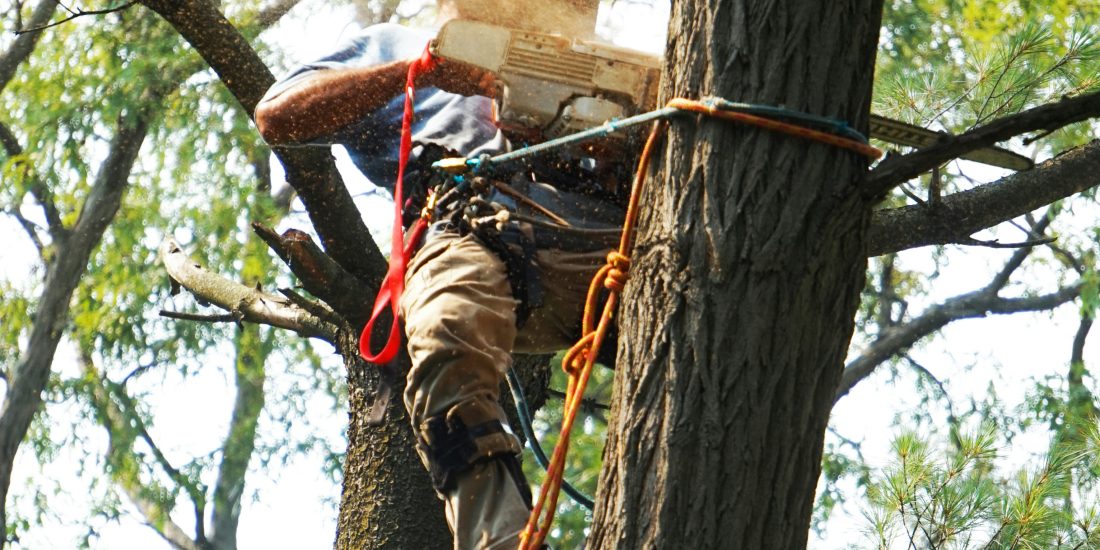
You cannot switch summer branch drop off entirely, but you can shorten the odds and limit the damage. The sensible starting point is a proper inspection of your larger trees by a qualified arborist, who can assess overextended limbs and the general condition of the crown. From there, a measured crown reduction takes weight off the ends of long branches and eases the leverage acting on them, while thinning lightens the load that a dense summer canopy places on the frame. Concentrating this work on the trees that hang over seating, paths and parking gives you the most protection for the effort.
What to do if a limb has already come down
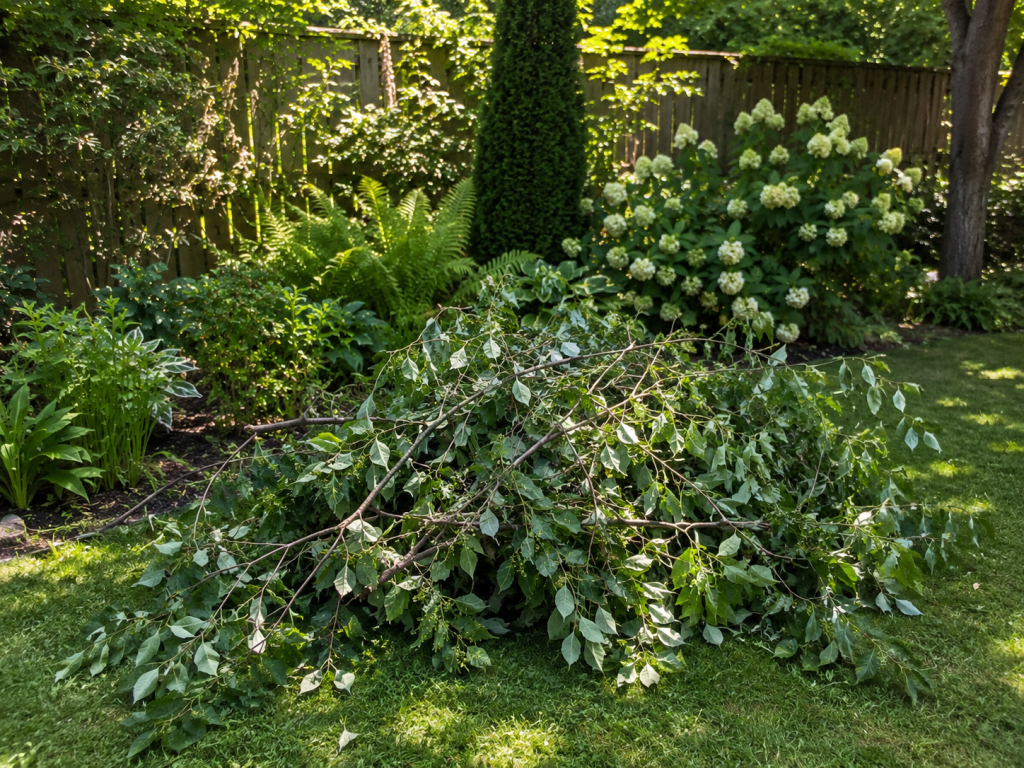
If a large branch has already dropped, keep people and pets well clear of the area, and stay especially cautious if it has landed on or near power lines, a building or a vehicle. A fallen limb of this size is heavy and can be under tension, so it is not a job to tackle with a household saw. It is worth having the rest of the tree looked at as well, since one failure is a good prompt to check whether others might follow. Our 24/7 emergency tree service is there for exactly these moments.
FAQs
What causes summer branch drop?
The honest answer is that it is not fully understood. Research points to a mix of factors, including the way a tree handles water on a hot day, the weight of a limb in full leaf, and slow-growing cracks within the wood. What is clear is the trigger, which is hot, dry, still weather, most often in the afternoon or evening.
Which trees are most likely to be affected?
Large, mature broadleaved trees are the usual candidates, with oak, beech, ash, elm, horse chestnut, sweet chestnut and cedar reported most often. Big, spreading trees with long horizontal limbs are far more prone to it than small or young ones.
Can summer branch drop be predicted or prevented?
It cannot be predicted with any certainty, and the branch that fails often looks healthy right up to the moment it goes. It cannot be prevented outright either, but the risk can be reduced through regular inspection and sensible crown work that takes weight off long, heavy limbs.
Does a dropped branch mean the tree is diseased?
Not necessarily. Summer branch drop often happens on trees that appear to be in good health, which is part of what makes it so surprising. Even so, it is always worth having the tree checked afterwards, in case there is an underlying problem as well.
What should I do if a large branch falls in my garden?
Keep everyone away from the branch and the tree above it, and take extra care if it is near power lines, a building or a car. Because these limbs are heavy and can be under tension, removal is best left to professionals, who can also judge whether the rest of the tree needs attention.
Should I worry about the large trees near my house?
There is no need to lose sleep over it, but if you have big mature trees hanging over places where people regularly sit, walk or park, a professional inspection is a sensible step. It gives you a clear picture of any overextended limbs and the option to reduce the risk before the hottest weather arrives.
Worried about a large tree this summer? Let’s take a look
Summer branch drop is one of those risks that is easy to ignore until it happens, and far easier to manage before it does. Thor’s Trees is an ARB Approved Contractor working across North London and Hertfordshire, and we help homeowners and property managers keep large, mature trees safe through the summer. Whether that means a professional tree inspection and report on your biggest specimens, careful tree surgery and maintenance such as crown reduction and thinning to take weight off long limbs, or ongoing residential tree care to keep everything in good order, the team is here to help.