


Growing palms in North London, Hertfordshire and the wider UK
Wander through a Cornish garden in July, or walk along the seafront at Torquay, and you would be forgiven for thinking you had drifted somewhere much warmer than Britain. Tall palms lean over the promenade, looking thoroughly at home. It is one of the subtle surprises of the British garden: with the right variety and a sheltered corner, palms cope here far better than most people expect, even when the frost sets in.
They will not behave exactly as they would in the Mediterranean, mind, and a hard winter can test them. The trick is choosing a palm bred for cooler, damper conditions and giving it a spot that works with the climate rather than against it. Here is what thrives, what tends to go wrong, and how to keep a palm looking its best through a British year.
Which palms cope well with a British climate
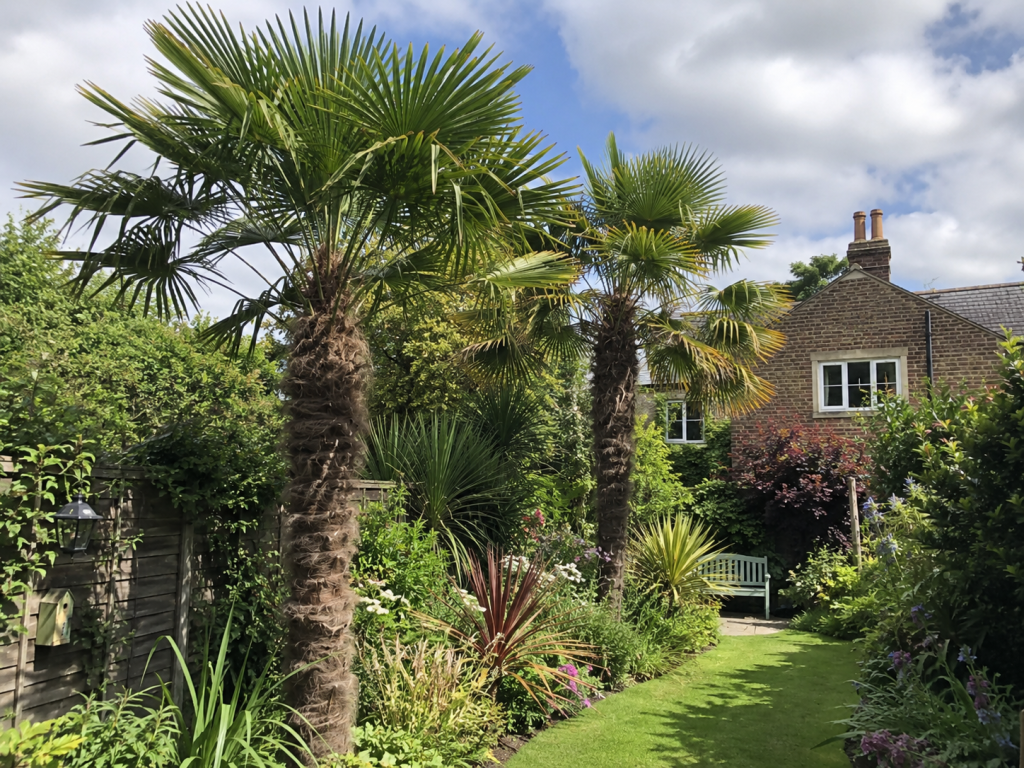
The standout palm tree is the Chusan palm, also known as the Chinese windmill palm (its botanical name is Trachycarpus fortunei). It is comfortably the hardiest palm widely grown here, shrugging off frost down to around minus fifteen degrees once it has fully grown, which covers all but the very harshest spells in most of the country. Its trunk is wrapped in a shaggy fibrous coat that insulates it, and the broad fan-shaped fronds give it that tropical outline.
If you want something shorter and tougher, the dwarf fan palm (Chamaerops humilis) is the only palm native to mainland Europe and handles cold and wind well, staying compact and bushy rather than towering. You will also see the so-called cabbage palm or Torbay palm dotted around seaside towns; that is actually a Cordyline, not a true palm, though it gives a similar look and copes with coastal conditions. At the tender end sits the Canary Island date palm (Phoenix canariensis), the big feathery one everyone pictures on holiday. It really only survives outdoors in the mildest pockets, think Cornwall, the Isles of Scilly and sheltered coastal gardens, and will struggle through a cold inland winter without serious protection.
That regional difference matters. A windmill palm in a sheltered London or Hertfordshire garden has a very different life from one on the Devon coast. Inland gardens see sharper frosts and the dreaded frost pocket, where cold air settles in low spots overnight, so variety choice and positioning do most of the heavy lifting.
Common issues to look out for with palm trees
The cold is the obvious one. After a hard frost you may see the older fronds brown off at the tips, which is usually cosmetic. The part that really matters is the growing point at the very centre of the crown, sometimes called the spear. If that rots, the palm cannot push out new growth and the whole plant can be lost, so the centre is what you protect first.
Wet, cold soil over winter does more quiet damage than frost alone. Palms hate sitting in waterlogged ground, and a combination of soggy roots and low temperatures is a recipe for root and crown rot. Yellowing fronds often point either to that waterlogging or to a shortage of nutrients such as magnesium or potassium, which shows up as pale or patchy leaves. It is the same principle that applies to any tree under stress, and learning to read the early warning signs of a struggling tree will help you catch a problem while it is still fixable.
Exposed sites bring their own headache. A tall palm in a wind tunnel will have its fronds shredded and tattered, and a young one can rock in the ground before its roots take hold, so some shelter from high winds pays off. On the pest front there is genuinely good news: palms are largely trouble-free in British gardens. Scale insects can appear on stressed plants, and there is a notifiable pest called the red palm weevil that has been spreading through southern Europe, which authorities here keep a careful watch on as summers warm. It is not a day-to-day worry for a UK gardener yet, but it sits alongside the other pests, diseases and fungi that trouble trees as something to be aware of.
How to look after your palm tree in the UK
Get the position right and a hardy palm asks very little of you. Give it a sunny, sheltered spot in free-draining soil, away from any frost pocket, and work some grit into heavy ground before planting so water never lingers around the roots. That single decision, drainage, prevents most of the winter trouble before it starts.
Through the growing season, water regularly while the palm is putting on new fronds, then ease right off as autumn arrives so the plant goes into winter on the dry side. A balanced feed across spring and summer keeps the foliage a healthy green and supports steady growth. Young palms are the most vulnerable to cold, so in the hardest spells it is worth gathering the fronds together, tying them loosely upright and wrapping the crown in horticultural fleece, with a mulch around the base to insulate the roots. The aim is simply to keep that central growing point dry and sheltered, not to swaddle the whole plant.
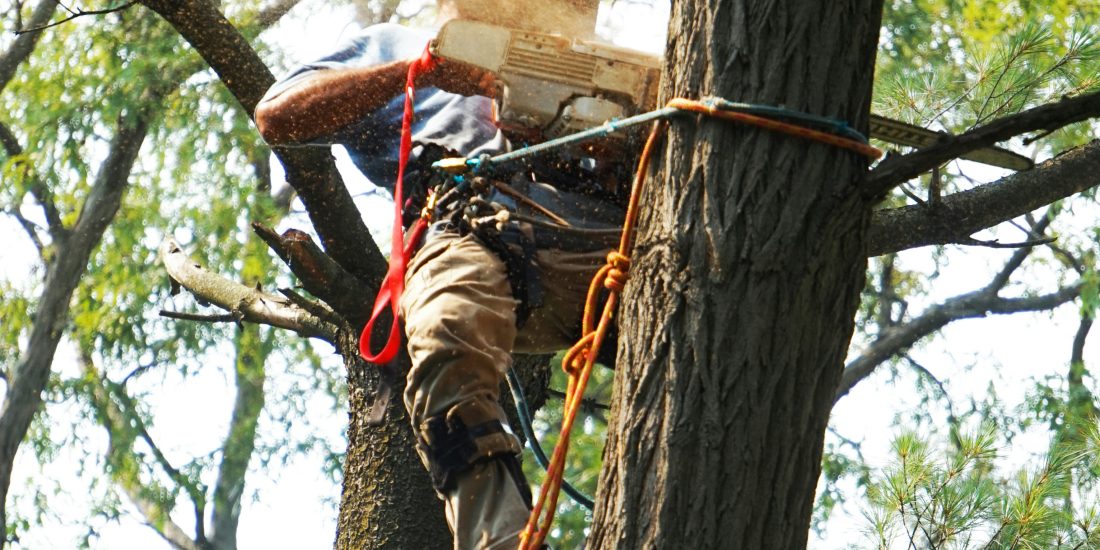
Pruning is where good intentions cause the most harm. Established palms need very little, and the rule is to remove only fully brown, dead fronds. Never cut into green growth or trim back the crown, because unlike a broadleaf tree a palm grows from that single central point and cannot regenerate from a cut stem. The leaf bases and frond edges can be genuinely sharp too, so stout gloves are sensible. A light tidy of the dead lower fronds once a year is usually all a mature palm wants.
Are palms good for shade in the summer?
Up to a point, and it is worth being honest about it. A mature fan palm carries a broad crown of large, deeply divided fronds, and on a high trunk that does cast a pool of shade beneath it. The shade is light and dappled rather than the deep, cool canopy you would get from a big broadleaf like an oak or a lime, so a palm is lovely over a seating area or a patio where you want a Mediterranean feel and some relief from direct sun, without plunging the whole corner into gloom.
Because it is evergreen, that structure and light shade is there all year rather than vanishing in autumn. If deep shade is the main thing you are after, a palm on its own will not deliver it, and you would do better pairing it with denser planting. The dappled light a palm allows through is actually a bonus for anything growing underneath, much as letting more light reach the plants below helps a border thrive beneath any tree.
Why a palm can be good for your garden
Beyond the holiday-postcard appeal, a palm earns its place for solid practical reasons. It is evergreen and architectural, holding its height and shape right through winter when the borders have died back and everything else looks bare, so it gives the garden a backbone in the months that need it most. As a single specimen it makes a strong focal point, and a few together can soften a hard line of fencing.
It is fair to say a palm does less for native wildlife than, say, an oak or a hawthorn, though the sprays of small flowers a windmill palm throws up in early summer do draw in pollinators. If supporting wildlife is high on your list, the sensible approach is to enjoy the palm for its structure and pair it with native trees and shrubs that pull their weight on that front.
FAQs
How cold is too cold for a palm tree in the UK?
An established windmill palm copes with frost down to around minus fifteen degrees, which covers most British winters. Young or recently planted palms are far more tender and benefit from fleece protection in their first few winters until their roots and trunk have toughened up.
How fast do palm trees grow in the UK?
Slowly, especially in our cooler summers. A windmill palm might add only a few centimetres of trunk a year early on, picking up to perhaps twenty to thirty centimetres once it is well established and happy. Patience is part of the deal, but the steady growth also means very little upkeep.
Can you grow palm trees in pots in the UK?
Yes, and it is a good option for colder gardens because you can move the pot to a sheltered spot or against a warm wall over winter. Use a large container with excellent drainage, water more often than you would a palm in the ground through summer, and feed regularly, as potted plants run out of nutrients faster.
Do palm trees lose their leaves in winter?
No, the hardy palms grown here are evergreen and keep their fronds all year. The lower fronds brown off naturally with age and can be trimmed away, but a healthy palm holds its green crown right through the winter.
Why are my palm’s leaves turning brown or yellow?
The usual culprits are cold damage on the older fronds, waterlogged soil around the roots, or a shortage of nutrients such as magnesium. Browning at the tips of old leaves is rarely serious, but if the central spear in the middle of the crown starts to brown or soften, that is the warning sign to act on quickly.
Do I need permission to remove a palm tree?
Possibly. Any tree can be protected by a Tree Preservation Order or by sitting within a conservation area, and palms are no exception, so it is always worth checking with your local council before removing or heavily cutting one. A quick check now avoids a fine later.
Talk to Thor’s Trees about your palm
Thor’s Trees is an ARB Approved tree surgery firm working across North London and Hertfordshire, and palms are part of the picture as more local gardens go for that exotic, evergreen look. Whether you want a mature palm safely pruned and tidied, an honest opinion on one that is struggling, or help after wind has battered the crown, the team can advise on the right course of action.
For everyday care and tidying, see residential tree surgery and care and tree surgery and maintenance. If a palm is unwell or you need a professional assessment before any work, the team offers tree surveys, reports and consultancy. Should a palm need to come out, that is covered by stump grinding and removal, and storm-battered trees are dealt with through storm-damaged tree cleanup. Get in touch for a free, no-obligation quote.