


What the term covers, how it varies by site, and where tree and vegetation work fits in
Walk onto a school site, a cemetery, or a sports ground first thing in the morning and the odds are someone has already been there before you. The grass is cut to a sensible height, the paths are clear, the hedges are kept back from the entrance, and the trees overhead aren’t dropping branches onto the car park. Most people only really notice it when it stops happening, and all that quiet, steady upkeep is grounds maintenance.
Grounds maintenance is the catch-all term for keeping an outdoor space safe, tidy, and usable all year round. It stretches across mowing, planting, drainage, hard surfaces, and the bigger trees and vegetation that need a qualified hand. This guide walks through what the term covers, how it changes depending on the site, and where the tree side of it (arboriculture, the care of trees) fits in.
What grounds maintenance covers
At its broadest, grounds maintenance is the planned care of any outdoor area that isn’t left to fend for itself. Public parks, school playing fields, business parks, housing estates, cemeteries, and private grounds all need a regular cycle of work to stay safe and looking presentable, and a maintenance contract spells out who does what, and how often.
The everyday end of it is the work most people picture: mowing lawns, strimming edges, weeding borders, trimming hedges, sweeping up leaves, and keeping paths and car parks free of moss and debris. Then there’s the seasonal side, like planting in spring, the heavier cutting back in autumn, and clearing or gritting through winter. None of it is glamorous, but a site that lets it slide starts to look neglected within a single growing season.
Above all that sits a tier of work that calls for trained specialists rather than a general gardener. Large or mature trees, dense undergrowth, anything growing near buildings or power lines, and any vegetation on a protected or sensitive site all fall into this bracket, and it tends to be handled by a qualified arborist rather than the regular grounds team.
Where tree and vegetation work fits in
Most of the trees, shrubs, and overgrown corners on a managed site are too big, too close to buildings, or too high-risk for a general grounds team to take on safely. That’s the point where ordinary gardening gives way to arboriculture.
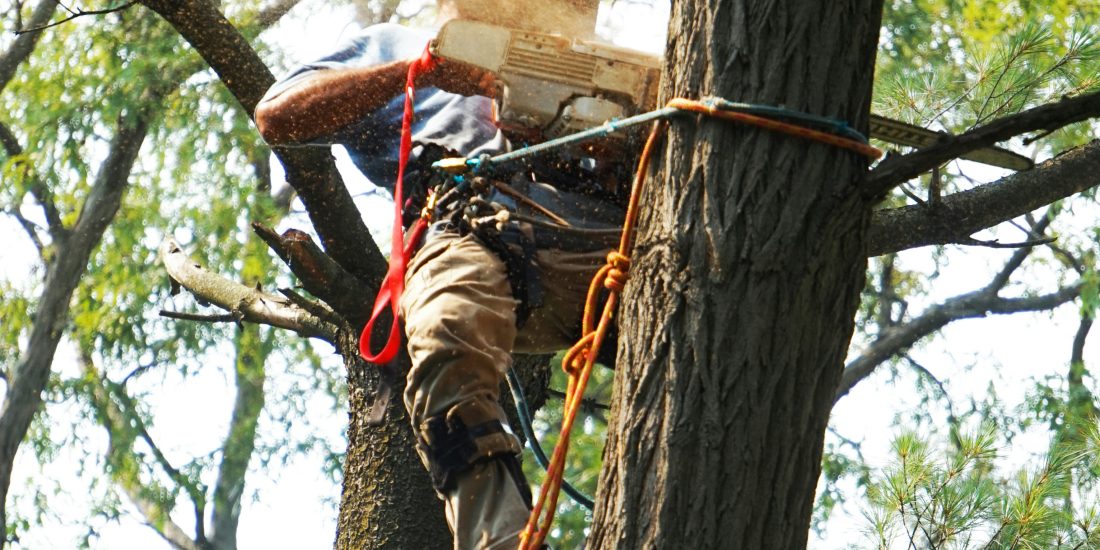
On most commercial sites the tree work settles into a fairly steady rhythm: a proper look over the trees on a sensible cycle, pruning to keep crowns clear of roofs, windows, and walkways, taking out deadwood before it has the chance to fall, and felling anything that has turned unsafe. It also covers grinding out the stump once a tree is down, and clearing the self-seeded growth that creeps along boundaries and fence lines if nobody keeps on top of it.
When a site has been left to its own devices for a while and the vegetation has gone well beyond what a strimmer can cope with, clearance work (sometimes called devegetation) brings it back to something workable. Folding the heavier tree and clearance jobs into the same schedule as the routine maintenance usually beats treating them as a string of one-off emergencies, because the problems get spotted while they’re still small and cheap to deal with.
Every site has its own demands
No two sites are looked after in quite the same way, because the people using them and the rules wrapped around them aren’t the same either.
A school’s grounds have to stay safe for children, and that holds as firmly in the holidays as it does in term time, so the trees anywhere near playgrounds, fields, and walkways get a close eye kept on them.
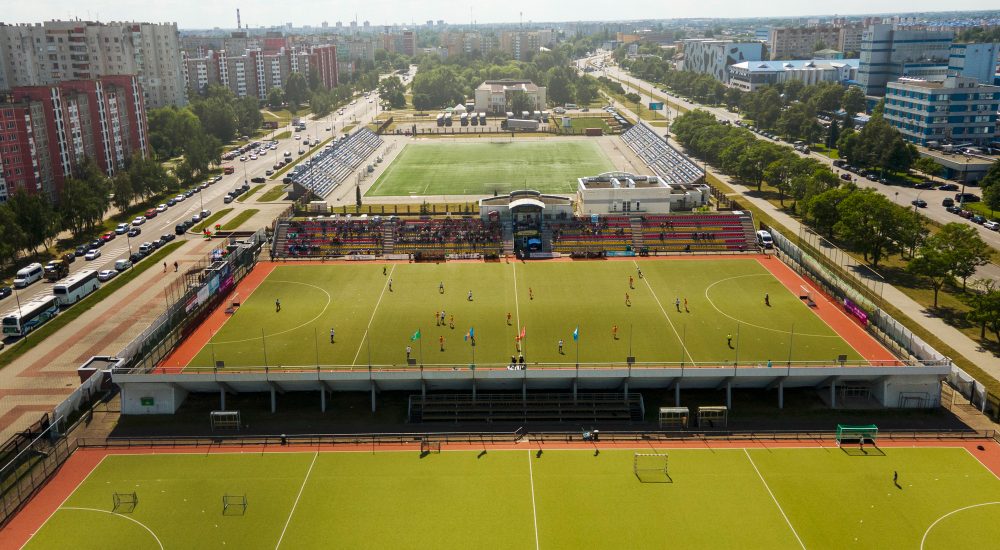
Sports grounds are judged on the playing surface above almost everything else, so the trees around the edges get managed for the shade, leaf fall, and root spread that would otherwise start to interfere with the pitch.
Cemeteries are in a world of their own, needing to stay calm, accessible, and respectful, so the mature trees you often find on older burial grounds have to be kept safe without disturbing graves or memorials.
Why grounds maintenance is more regulated than it looks
From the outside, grounds work can look like gardening on a grander scale. On a commercial site, though, it carries real legal weight, and getting it wrong can land you with a hefty bill.
Plenty of established trees are covered by Tree Preservation Orders, a council protection that makes it an offence to prune or fell them without consent, so whoever looks after the site can end up prosecuted if a protected tree comes down without the paperwork. Tree work also has to fit around nesting birds, which are protected by law from roughly March to August, so the cutting and clearing gets timed around the nesting season rather than booked in whenever the calendar happens to be free.
On the bigger projects, the Construction (Design and Management) Regulations, known as CDM, set out duties around how the work is planned and carried out safely, especially where there’s machinery, working at height, or site clearance involved. None of this makes a site impossible to look after, but it does explain why commercial grounds work is better off with someone who knows the rules than with whoever happens to be free that week.
Planned cycles and reactive call-outs
Most ground maintenance is planned well in advance. A site gets surveyed, a schedule is agreed, and the work happens on a cycle, so problems are caught early and the budget stays predictable across the year.
Weather doesn’t always play along, mind. After high winds or heavy snow, trees can shed limbs or come down across an access route, and a site that was perfectly fine on Friday can be blocked or unsafe by Monday morning. Reactive call-outs are there for exactly that kind of storm damage, clearing the fallen timber and making the area safe so the place can reopen. A sensible maintenance plan cuts down how often this happens, since trees that get inspected and pruned on a cycle are far less likely to fail, but no amount of planning ever removes the need for a number to call when something does come down.
What to look for in a grounds maintenance contractor
Because so much of the specialist work involves height, machinery, and legal duties, you really want the people doing it to be qualified for the work, rather than generally handy with a chainsaw.
For the tree and vegetation side, the clearest signal is ARB Approved Contractor status, an Arboricultural Association accreditation that’s only handed out after an audit of a company’s work, safety record, and paperwork. Beyond that, it’s perfectly reasonable to ask for proof of insurance, evidence that the climbers and machine operators hold current tickets (the formal certificates of competence for chainsaw and access work), and a method statement setting out how a particular job will be done. A contractor who can produce all that without batting an eyelid is one who treats grounds work as the skilled, regulated trade it is.
FAQs
What does grounds maintenance include?
It includes the routine upkeep of an outdoor space: mowing, strimming, weeding, hedge trimming, leaf and litter clearance, and seasonal planting, alongside the care of larger features such as trees, hard surfaces, and drainage. On commercial sites the tree and vegetation work usually sits with a specialist arboricultural contractor.
Is grounds maintenance the same as landscaping?
Not quite. Landscaping is mostly about designing and building an outdoor space, such as laying paths, planting beds, or putting in new features. Grounds maintenance is the ongoing work that keeps that space safe and tidy once it exists.
How often should commercial grounds be maintained?
It depends on the site and the season. Grass and borders might be tended fortnightly through the growing months and less often in winter, while trees are typically inspected once or twice a year and pruned on a longer cycle. A maintenance schedule sets the frequency in advance so nothing is left too long.
Can a general gardener handle the trees on a managed site?
For small shrubs and light hedge work, often yes. Larger or mature trees, anything near buildings or power lines, and any work at height should go to a qualified arborist, both for safety and because protected trees carry legal restrictions a general gardener may not be aware of.
Is grounds maintenance work regulated?
The tree and vegetation side is. Tree Preservation Orders, conservation area rules, nesting bird protections, and the CDM regulations on larger projects all apply, and breaching them can lead to prosecution or fines. That’s the main reason commercial sites use accredited contractors for the specialist work.
Do grounds and tree work usually come from the same contractor?
Sometimes, though not always. Routine grass, border, and litter work is often handled by a general grounds team, while the trees and heavier vegetation go to a specialist arborist. On larger or tree-heavy sites it can be tidier to have the arboricultural work co-ordinated with the rest of the maintenance, so the two are planned together rather than separately.
Talk to Thor’s Trees about your site
If you’re looking after a school, a sports ground, a cemetery, or any commercial site with mature trees on it, the tree and vegetation side of grounds maintenance is where most of the risk and regulation lives, and it’s the part that gains the most from a qualified pair of hands.
Thor’s Trees is an ARB Approved Contractor working across North London and Hertfordshire, and the arboricultural side of grounds work is exactly what the team does: tree surgery and maintenance, vegetation clearance, and storm damage response, with dedicated cover for school grounds, cemetery grounds, and sports grounds, where the trees need keeping in check around the people using the site. For a survey, a maintenance schedule, or a quote, get in touch.