

For site owners, managing agents and facilities teams across North London and Hertfordshire
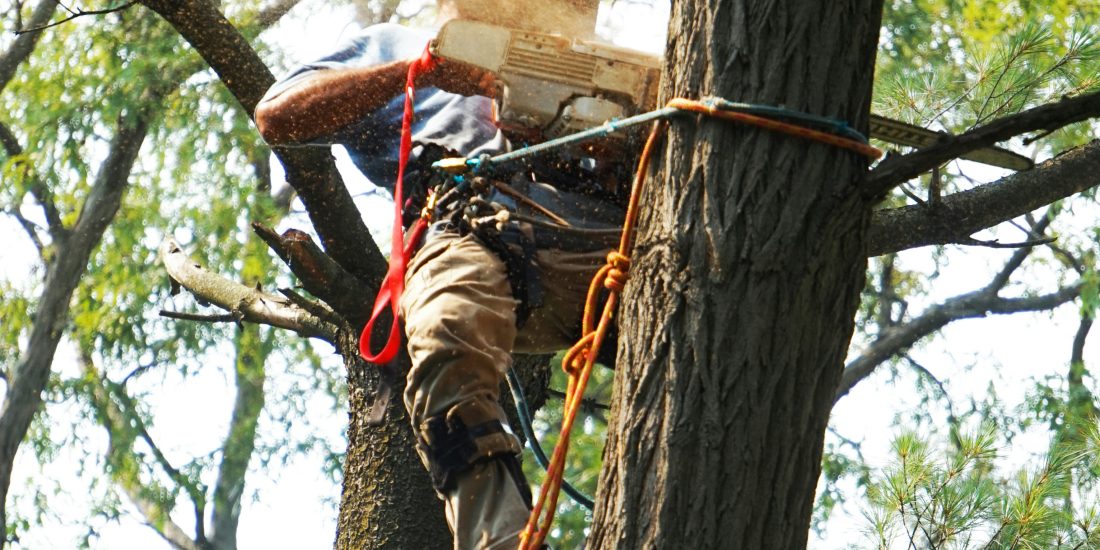
The same row of limes, taken down by the same firm using the same saw, can be an ordinary maintenance job one month and regulated construction work the next. Reducing them because they have outgrown the office car park is grounds maintenance. Felling them so a contractor can put an extension where they stand is construction work, and that second version drags along a set of duties landing on you as the site owner rather than on the firm doing the cutting. The Construction (Design and Management) Regulations 2015, shortened by everyone to CDM, are the reason for the difference.
Where the line falls
CDM applies to construction work, and the regulations spell out what that means. Alongside building and civil engineering, the definition covers the preparation for an intended structure, including site clearance, which is the phrase that pulls tree work in. Clearing vegetation and felling trees so that something can be built there is preparation for a structure, so it counts.
What does not count is a tree on its own. The same regulations define a structure as a building, or masonry, or a railway line, or something similar, and a lime tree is none of those. Working on a tree is therefore not construction work by itself. The question is never really about the tree, it is about whether anything is going to be built.
Routine maintenance sits outside it
Crown reductions, deadwooding, an annual inspection round, a storm callout on an occupied site: none of that is construction work, so CDM does not apply, however large the trees or the site. Regular commercial grounds work falls into the same bracket. That does not leave the job unregulated. A different set of rules does the work instead, and those come further down.
Site clearance brings CDM in
The moment tree work forms part of a build, it stops being a standalone job and becomes one element of a construction project. Felling ahead of groundworks, devegetating a plot before demolition, or clearing scrub so a survey rig can get in are all preparation for an intended structure.
Two things follow from that. The tree firm becomes a contractor in the CDM sense, with the duties attached to the role, and the project as a whole comes under the regulations even where the tree element only takes a few days. A three-day felling job at the front end of a nine-month build is part of a nine-month project rather than a three-day one, which is where a lot of people trip up.
What lands on you as the client
This is the part site owners tend not to expect. Where more than one contractor is working on a project, or where that is reasonably foreseeable, the client has to appoint a principal designer and a principal contractor in writing, before the construction phase begins. Two contractors is a low bar, and a tree firm plus a groundworker is two.
The sting is what happens when you do not. The regulations do not fine you for the omission, they hand you the job instead: where no principal designer is appointed, the client carries out those duties, and the same applies to the principal contractor. Skipping the paperwork does not remove the duty, it moves it onto your desk. You also owe the contractors pre-construction information about the site, and every project needs a construction phase plan drawn up before anyone sets up.
When the HSE has to be told
A project is notifiable if the construction work is scheduled to last longer than 30 working days and have more than 20 workers on site at once, or to exceed 500 person days. Person days are workers multiplied by days, so a modest crew on a long job reaches the threshold faster than people assume. Notice goes to the Health and Safety Executive in writing, from the client rather than the contractor, before the construction phase begins, and a copy is displayed on site. Tree work by itself almost never gets near those numbers. Tree work as the opening act of a development frequently does, because the clock runs on the whole project.
The rules that apply either way
Tree work carries its own regulatory baggage regardless of whether CDM is in play. The Work at Height Regulations 2005 cover climbing and platform work, which is most of the job. Lifting equipment rules bring climbing lines, harnesses and rigging kit into a regime of recorded examination, work equipment rules cover saws and chippers, and general health and safety law requires the risk assessment sitting behind all of it.
On top of those sit the tree-specific ones, meaning protected trees and nesting birds between roughly March and August. A contractor should hand over a risk assessment and method statement without being chased for it, and ARB approval is a fair shortcut for checking they work that way.
FAQs
Does CDM apply if only one tree contractor is on site?
The project still comes under the regulations, but you do not have to appoint a principal designer or principal contractor, because that requirement bites where more than one contractor is involved. A construction phase plan is still needed, and with a sole contractor it is that contractor who draws it up.
Is routine tree surgery on an occupied commercial site construction work?
No, as long as it is genuinely standalone. Maintenance of a tree is not maintenance of a structure, so an inspection round, a crown reduction or a storm callout on a site where nothing is being built falls outside CDM.
What should I ask for before work starts?
A risk assessment and method statement written for your site rather than a generic one, proof of public liability insurance, evidence that climbing and rigging equipment has been examined, and confirmation of who is coordinating if other trades will be on site at the same time.
Do the Building Safety Act dutyholder rules replace CDM?
No. The dutyholder roles introduced for building control carry similar titles to the CDM ones and are separate legal duties sitting alongside them rather than replacing them. CDM 2015 still applies to construction work in its own right.